- Welcome
- Campus Maps
- History
- Mission Statement
- Accreditation
- Administration
- Employment
- Human Resources Employment Process FAQ
- Position Vacancies
- Salary Schedule (PDF)
- Employee Benefits
- Paid Holidays
- Employee Handbook (PDF)
- Faculty Handbook (PDF)
- BENCOR Special Pay Plan (PDF)
- Social Security Collection and Usage
- Affordable Care Act Notice (PDF)
- Social Security Disclosure Summary (PDF)
- Tobacco-Free College
- Drug-Free Workplace & Campuses
- Technology Usage Acknowledgment (PDF)
- Employee Safety Manual (PDF)
- SFSC’s Annual Security and Fire Safety Report (PDF)
- Calendars
- News
- Social Media
- Honoring Our Retirees
- Celebrating Our Trustees
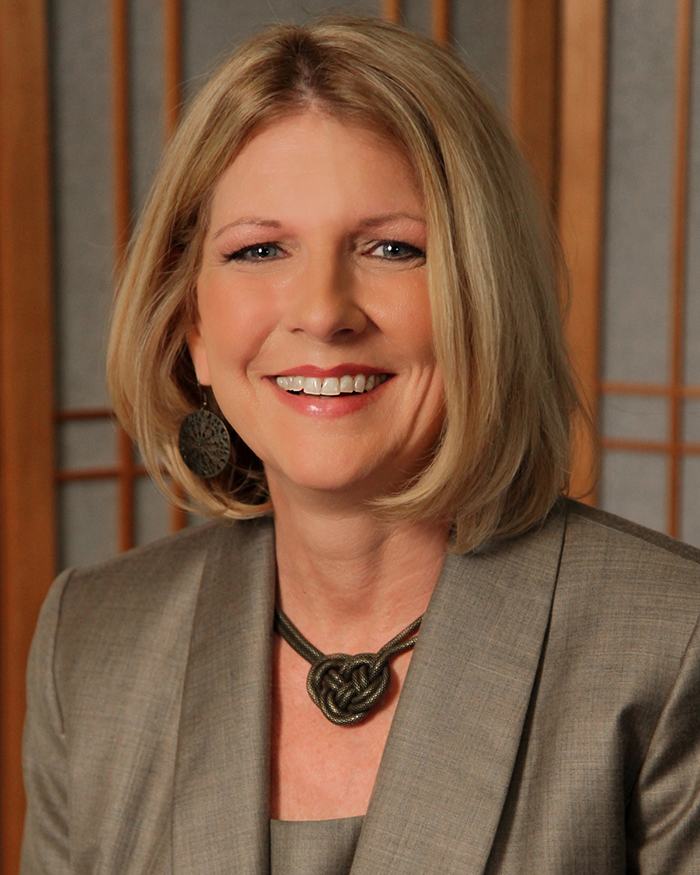 AVON PARK, Fla. – July 1, 2026 – South Florida State College (SFSC) alumna, Barbara Stites, who graduated with an Associate in Arts from the College in 1974, spent most of her career in Library and Information Sciences. Although now retired, she looks back on her personal and professional life with a great sense of accomplishment and service to libraries throughout Florida.
Stites earned her doctorate in Leadership and Education with a specialization in Human Resource Development from Barry University, a Master of Arts in Library and Information Science from the University of South Florida, and her Bachelor of Arts in Education from the University of South Florida.
However, Stites’ academic and professional careers may never have come to pass, but for Stites’ own tenacity as well as the generosity of one person who strongly believed that education paves the road to a better life.
Stites’ family moved to Broward County, Fla. from New Jersey when she was 10 years old. At age 15, she moved to Lake Placid and, later, graduated from Lake Placid High School.
“My father graduated from Pace University in New York on the GI Bill after World War II,” she said. “But my parents were divorced and I didn’t have much contact with my dad. So, college wasn’t familiar to me. I came from serious poverty. We lived in a travel trailer in a trailer park in Lake Placid. I moved out of my mother’s place when I was 16 and was then on my own. I just wanted to do what I wanted to do when I wanted to do it. I was a feisty teenager.”
Stites decided that she wanted to become a librarian. “I was a curious individual and just loved learning,” she said. “I like reading — it was an escape for me. But I just loved digging through information. I love the hunt, just as people go to thrift stores and hunt for good deals. Some people like to go fossil hunting. I loved the idea of researching.”
But Stites felt somewhat limited in her resources to become a librarian. “At the time in Central Florida, a woman had three choices: she could become a secretary, a nurse, or a teacher,” she said.
Stites knew little about pursuing a college degree or how to apply for college. In fact, she was unaware that South Florida State College (South Florida Junior College at that time) existed in her own community. “But I heard that a scholarship was available through the Lake Placid Rotary Club,” she said. “And I considered going to secretarial school. The man who was in charge of the Rotary’s scholarships was Mr. Wilkins.”
When Stites applied for the Rotary scholarship, Mr. Wilkins contacted her and said that the scholarship was for college, but that secretarial school wasn’t considered college. He said, “I have an idea. How about I pay for your first semester of secretarial school personally?” Stites agreed.
A few months later, Stites spoke with Mr. Wilkins and said that she learned about South Florida State College in Avon Park and would like attend. Mr. Wilkins agreed to pay for her first semester at the College.
“By the end of my first semester at the College, I got straight A’s,” Stites said. “Then Mr. Wilkins said he’d pay for my second semester. After that, I had gotten married and was able to take care of my own financial obligations. All these years later, I’m a strong supporter of scholarships. They change lives. Mr. Wilkins changed my life.”
Stites blossomed as a student at SFSC. “Between the staff, faculty, and other students, everybody was encouraging. It had a positive, ‘Can Do’ atmosphere. They recognized that students are out there like me who need an extra hand.”
Stites took an astronomy class at SFSC from Dr. Bill Gene Smith. “In his class, we learned more about education than we did astronomy, because he was running for the Highlands County School Board for the first time,” she said. “And he wanted to talk about education. It inspired me.”
After graduating from SFSC, Stites continued her education at the University of South Florida in Tampa. “Three women I knew from SFSC and I carpooled from Highlands County to USF to take classes,” Stites said. “We’d get up at 4 a.m., attend classes all day, then drive home.”
Right out of college, Stites was offered a job at Lake Placid Elementary School, teaching first, second, and third grades. She taught at the school for over nine years.
“All the while, I still had the desire to be a librarian,” she said. “But to be an entry-level librarian, you needed a master’s degree. So, I went back to college, driving to Tampa, Fort Myers, and Orlando for classes.” Stites earned her master’s degree and took her first job as a librarian at Sebring High School, working with Peggy Smith, Dr. Bill Gene Smith’s wife.
As the years passed, Stites worked as a librarian in a corporation and at a law firm. “I was training lawyers and accountants in how to do research. But they were being paid far more money than I. So, I made a list of the jobs that made the kind of money that I wanted to make.
A job came open as an executive director of a non-profit organization that paid good money. “It was a non-profit that was like a small business development center but for libraries,” Stites said. “So, I switched to leadership. That tipped me from frontline service as a high school or corporate librarian to leading an organization. That was a big shift for me.”
One of the highlights of Stites’ career came when she and colleague, Dr. Elizabeth Curry, created the first statewide training ground for library leaders in Florida called the Sunshine State Library Leadership Institute (SSLLI) that continues to serve a new generation of library leaders 20 years later.
“Around the late ‘80s or early ‘90s, a colleague of mine at the Tampa Bay Library Consortium and I talked about being able to provide internet access to the public. At the time, there was no internet access in people’s homes. We wrote a grant and got funding to provide the first internet access to the public in Florida. We rolled out the internet to a couple of rural libraries, some medium-sized libraries, and some larger libraries. We taught people about the internet, how it worked, what buttons to push. We did all the training that it took to get the first line of librarians trained so they could begin training the public on the internet and how to use it.”
“Eventually, we provided desktop access to the internet at all these test libraries, such as the one we set up in Wauchula. We also hooked up 11 large libraries so that they had the first online ‘card’ catalog.”
After four decades of library service, Stites retired in 2019 from her role as interim dean of the Florida Gulf Coast University Library. “When the university was new, I helped to build a library from the ground up. The library is the heart of a university. People come there to study and do homework, research, sleep, find a boyfriend, participate in student-centered activities. We did some serious research about student engagement in library spaces and what influenced that. We determined what kind of furniture supported that, what kind of lighting. We had a 133,000 sq. ft. building with 100 employees. We needed to manage a cadre of people like that and make sure they always provide the best customer service possible.”
Stites believes that in these times, the role of a librarian has changed, that you don’t just check out books. “Larger academic libraries are not so much about the books anymore. It’s about artificial intelligence and working with large data sets and crunching information. Public libraries have moved toward supporting people’s education and entertainment needs, but also their social needs. That requires the computer community supporting people who don’t have internet access.”
In Stites’ view, Information Sciences has become more and more important for the public. “So much of the information that we’re exposed to is not accurate,” she said. “Thinking about running a world on information that isn’t accurate scares me to death. It’s important that libraries and information scientists connect in any way they can with our students. Our main goal is to connect with students, employees, community members, and help connect them with information that they need to make the best decisions. If you’re at an educational institution, you’re supporting student learning and you’re supporting faculty research.”
To an extent, Stites’ early experience with college has come full circle. Her daughter, Emily Dabolt, is the executive director of institutional advancement at SFSC and oversees the SFSC Foundation. The Foundation solicits, receives, and manages charitable donations in support of the College, its programs, staff, and students. “My life changed through the scholarship from Mr. Wilkins and it led all the way to SFSC,” Stites said. “Emily has an opportunity to make a difference in other people’s lives through her job — along with all the support that’s at the College and from donors. A little generosity makes a huge difference in someone’s life.”