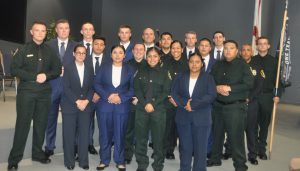
 Oct. 22, 2026 – South Florida State College (SFSC) celebrated the graduation of 19 students from the Basic Law Enforcement Academy, Class 275, on Thursday, Oct. 22. These graduates have completed their training and are now prepared to begin law enforcement careers in Florida.
The ceremony honored the graduates’ hard work, discipline, and commitment as they prepare to serve and protect their communities. The program featured speeches from SFSC representatives and graduating class members, along with the presentation of certificates and special awards recognizing the students’ academic performance, leadership, and achievements.
Melinda Burke, coordinator of Criminal Justice programs at SFSC, noted that this graduation marks the start of a new professional chapter and the beginning of the official responsibilities the graduates will assume within their communities.
“Graduation is not the finish line. It is the beginning of a responsibility that you will carry for the rest of your careers,” Burke said during her address.
Furthermore, eight of the 19 graduates were sponsored by public safety agencies, meaning they already have jobs waiting for them after completing their training. These agencies include the Highlands County Sheriff’s Office, the Hollywood Police Department, and the Arcadia Police Department.
The graduates were Class Leader Jacob Peters, Executive Officer Arieli Kaminski, Justin Marlow, Shawn Block, Javier Garcia, Erika Chavez-Luberto, Joshua Walls, Jeremy Jones, Caden Bradford, Frederick Estevez, Christian Pardo-Aldana, Melissa Perez-Zamorano, Alfonso Venegas-Baez, Julian Villegas, Rebecca Oser, Emily Alonzo, Michael Dunn, Timothy Gage, and Yuliana Torres-Bermudez.
The ceremony presented special recognition to several individuals, including Arieli Kaminski, executive officer of Class 275, who was honored as Top Academic, Executive Officer, and for achieving the highest overall performance in firearms. Additionally, Shawn Block received the Peer Leadership Award, while Jacob Peters was recognized as Class Leader.
In her speech, Kaminski reflected on the personal and professional growth all the cadets experienced throughout their training and the importance of supporting one another.
“We have learned not solely to look out for ourselves but for others,” said Kaminski, highlighting how the training taught everyone to recognize the value of teamwork.
The class slogan, “One team. One mission,” reflected the camaraderie and shared responsibility that defined these young individuals’ experiences.
The ceremony also featured Zachary Forbes-Edwards of the Florida Highway Patrol as the guest speaker. Other contributors included Dr. John McLaughlin, director of SFSC Criminal Justice programs, who offered brief remarks, and student Jacob Peters, who addressed the class.
Training these new officers reflects SFSC’s commitment to preparing professionals who can address public safety needs with discipline, integrity, and respect for their communities.
For more information about the Criminal Justice programs at SFSC, visit southflorida.edu or call the SFSC Criminal Justice Academy at 863-784-7285.
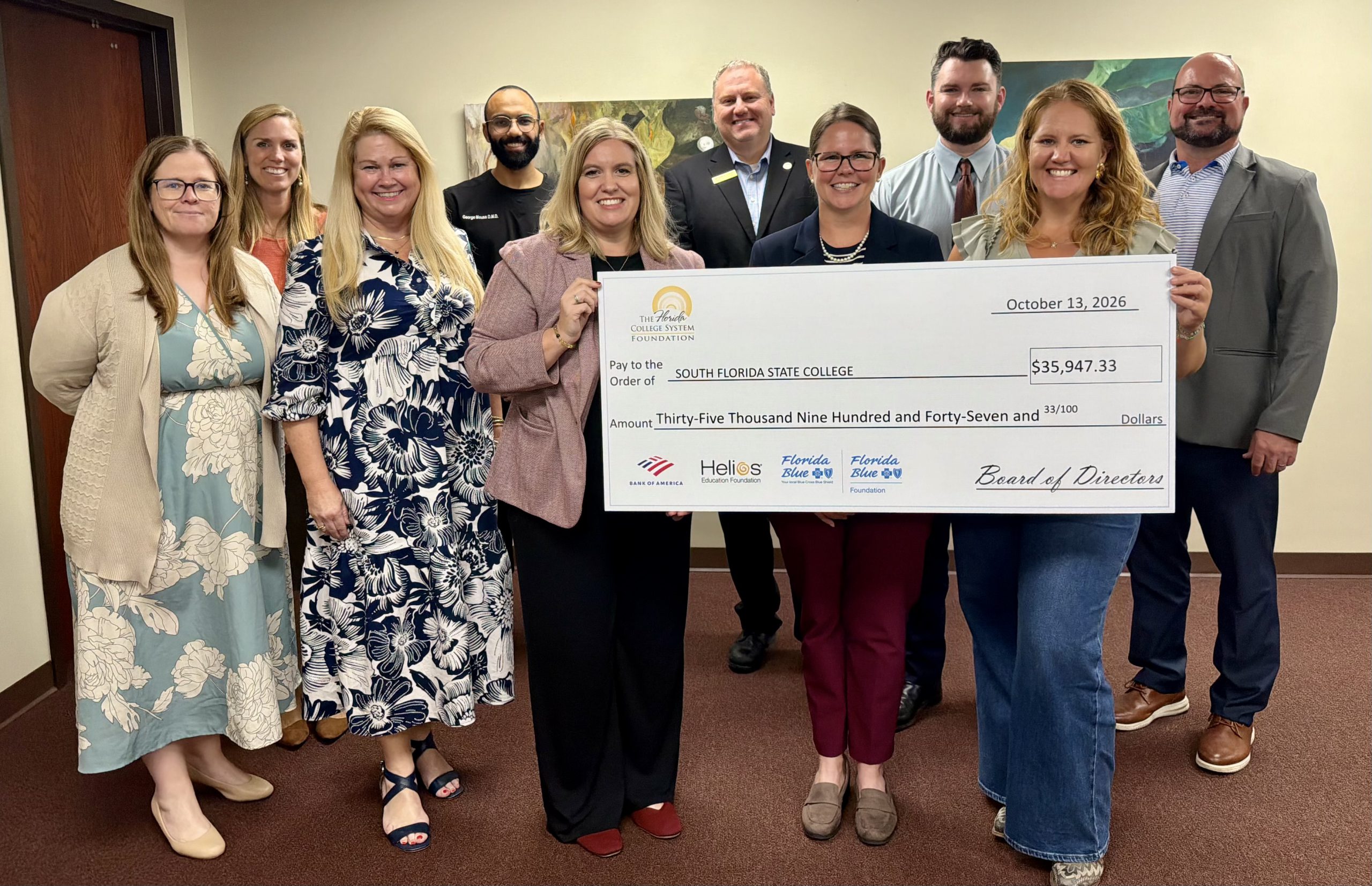
Oct. 22, 2026 – On Tuesday, Oct. 13, Mandy Roden, president and executive director of the Florida College System (FCS) Foundation, joined the South Florida State College (SFSC) Foundation at their Executive Committee meeting to present a check from the FCS Foundation for $35,947.33 to support student scholarships.
This year, the FCS Foundation awarded $1.7 million in scholarships to support first-generation, teaching, nursing, and allied health students across the 28 state colleges.
SFSC’s scholarship breakdown includes:
- $15,648.41 for the Florida Blue Nursing and Allied Health Scholarship
- $5,947 to support the Helios First Generation Education Scholarship, funded by the Helios Education Foundation
- $4,951.92 for the 21st Century Dream Makers Scholarship, funded by Bank of America
- $9,400 for the Allied Healthcare Student Scholarship
“The FCS Foundation’s investment in our students is a direct investment in the future workforce of our region,” said Emily Dabolt, executive director of institutional advancement at SFSC. “These scholarships will help students overcome financial barriers, complete their education, and enter careers where they will serve and strengthen our communities for years to come. We are deeply grateful for this support and are proud to be part of a statewide commitment to building a stronger future for Florida.”
For more information about the scholarships available at SFSC, visit southflorida.edu/support-sfsc/foundation-scholarships.
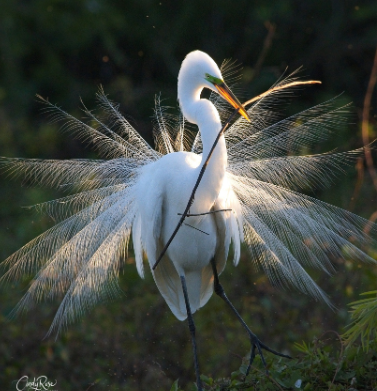
Oct. 21, 2026 – The Museum of Florida Art and Culture (MOFAC) at South Florida State College (SFSC) is pleased to present “Nature’s HeArt,” a dual exhibition featuring the expressive beauty of photography by Cindy Rose Eaton and watercolor painting by Beth Andrews.
On view from Friday, Nov. 6 through Wednesday, Dec. 9, the exhibition brings together two distinct, yet complementary, artistic approaches to seeing, interpreting, and celebrating the natural world.
Through photography and watercolor, Eaton and Andrews offer viewers unique perspectives on nature. Their work explores the beauty, character, and emotion found in the world around us, inviting visitors to slow down, look closely, and experience nature through two different artistic lenses.
The public is invited to an Artist Reception on Wednesday, Nov. 18 from 11 a.m. to 1 p.m. Guests will have an opportunity to meet the artists, view the exhibition, and enjoy refreshments and live music by Harry Havery.
Museum of Florida Art and Culture (MOFAC) is located on the Highlands Campus of SFSC at 600 West College Drive in Avon Park, Fla. MOFAC is open to the public Wednesday through Friday, 11 a.m. to 3 p.m. Admission and parking are free.
For additional information about Nature’s HeArt, the artist reception, or upcoming programs, please contact MOFAC at 863-784-7240.
 |
 |
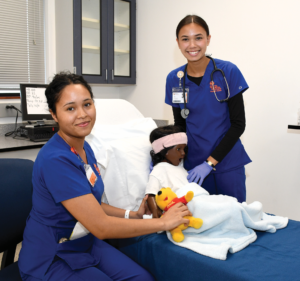
Oct. 19, 2026 – The South Florida State College (SFSC) Associate in Science in Nursing (ADN) and Bachelor of Science in Nursing (BSN) have been granted continued accreditation by the Accreditation Commission for Education in Nursing (ACEN) at its meeting in September 2026.
“The Nursing Department at SFSC has worked collaboratively with our healthcare and community partners to strengthen and enhance our Nursing programs, and we are proud to celebrate the achievement of ACEN accreditation for the next eight years,” said Dr. Kathleen Cappo, dean of health sciences at SFSC. “This accomplishment reflects the commitment of our faculty to student success, academic excellence, and workforce readiness. Their dedication ensures that graduates are well prepared to meet the evolving healthcare needs of our communities and contribute positively to the nursing profession.”
SFSC offers associate degrees in Generic Nursing (RN), Paramedic-to-RN Transition, and LPN-to-RN Transition, and a Bachelor of Science in Nursing, which were all approved for continued accreditation through spring 2034. The ACEN found that the support from SFSC’s clinical partners was an area of strength for both the associate and bachelor’s degree programs.
“Continuing accreditation for both of our Nursing programs confirms what our communities already know: SFSC prepares nurses who are ready to care for Florida’s Heartland,” said Dr. Michele Heston, vice president for academic affairs at SFSC. “ACEN granted our ADN and BSN programs the maximum term of accreditation, a direct reflection of the excellence our faculty and staff deliver to students every day at SFSC. ACEN also recognized the support of our clinical partners as a strength. Their investment in our students and faculty is an investment in the health of every family in Highlands, Hardee, and DeSoto counties. Congratulations to everyone who made this possible.”
For more information about the Nursing programs at SFSC, visit southflorida.edu/nursing or email healthsciences@southflorida.edu.
 Oct. 12, 2026 – South Florida State College (SFSC) and the University of Florida (UF) Institute of Higher Education have been awarded the Title III Strengthening Institutions Program (SIP) grant. The partnership will receive $4.65 million over five years to support the Florida Learning, Innovation, and Growth for a High-skilled Talent (FLIGHT) pipeline. SFSC will receive approximately $3.29 million and over $1.35 million will go to UF.
“We are excited to collaborate again with SFSC and continue building out this partnership,” said Dr. Lindsay Byron, interim director of the UF Institute of Higher Education. “FLIGHT is an opportunity to both improve current workforce education pathways between SFSC and UF and develop new programs in Precision Agriculture. Over the next five years, we will have the resources to provide the next generation of SFSC students with cutting edge education and opportunities.”
Through FLIGHT, the institutions will modernize their career and technical education (CTE) programs for the workforce, strengthen the current infrastructure to support workforce development, develop services to support workforce student success, and expand postsecondary pathways from SFSC to UF, and beyond.
“South Florida State College is grateful to the U.S. Department of Education and the U.S. Department of Labor for the approval of the Strengthening Institutions Program grant, known as FLIGHT,” said Dr. Mark Bukowski, vice president for student services at SFSC. “We also thank the University of Florida for their assistance in the grant process, and with whom we will partner with on this grant. FLIGHT will help plan and implement new skilled pathways for students in the Florida Heartland, which will lead to high wage opportunities and continue to build on the strong talent and community whom we serve at SFSC.”
Within the first two years of the program, SFSC plans to align its teaching and training to modern workforce practices and improve the systems and processes for students to therefore increase student engagement in support services and career pathways.
In the years to follow, more SFSC students will earn industry credentials and micro-credentials, improve training pathways for rural residents, embed AI and digital literacy across all programs, and increase transfer rates to UF.
For more information about SFSC, visit southflorida.edu, and for more information on the UF Institute of Higher Education, visit https://ihe.education.ufl.edu/about.
ABOUT THE UNIVERSITY OF FLORIDA COLLEGE OF EDUCATION
The UF College of Education has a long history of mission-driven excellence, working to advance research, prepare the next generation of educators, and solve society’s most pressing challenges. The College is No. 2 in the nation among all graduate and online graduate education schools. Among the 10 centers and institutes that operate at the College, the Institute of Higher Education (IHE) conducts cutting-edge research and offers data-driven recommendations for administrators and policymakers to better understand the challenges facing the industry at all levels. IHE partners with individual colleges and state systems to provide rigorous, innovative assessment of practices and policies aimed at improving student success.
In response to U.S. Secretary of Education Linda McMahon’s August 2026 letter to educational institutions, South Florida State College has prepared the following statement concerning academic rigor, transparency, accountability, student outcomes, and meeting Florida’s workforce needs:
At South Florida State College (SFSC), academic quality and student learning are evaluated through multiple, ongoing processes. Program-level learning outcomes, General Education Outcomes, and curriculum-controlled course objectives are regularly assessed to determine the extent to which students are achieving established learning expectations.
SFSC’s General Education Assessment process evaluates student achievement of established General Education Outcomes across the curriculum. Assessment results are reviewed to identify trends and opportunities to strengthen student learning and inform improvements to curriculum, instruction, and assessment.
The College also conducts an annual Educational Program Assessment (EPA) process focused specifically on program-level student learning. Program managers establish student learning outcomes, identify measures and expected levels of achievement, report assessment results, and document how findings are used for improvement. A faculty subcommittee reviews these assessments and provides feedback to strengthen the quality of program-level assessment and support continuous improvement.
Separate from the annual EPA process, SFSC conducts Educational Program Reviews to evaluate the overall health and effectiveness of its academic programs. Level I Program Reviews examine multiple indicators of program performance and demand. Based on those findings, programs may continue without further action or undergo a more extensive Level II review focused on program performance, demand, or both.
Throughout late 2025 and early 2026, SFSC reviewed its academic programs and services as part of its application for accreditation with the Higher Learning Commission (HLC). Administrators and staff from a variety of offices and academic departments developed a substantial report that can be viewed on the College’s website. After its initial review, HLC shared insights for continued excellence, and the College is currently awaiting a final accreditation decision expected in November 2026.
The College upholds high academic and technical standards, and several programs boast job placement rates above 90% for graduates and completers. SFSC’s student achievement data are published throughout its public-facing website so prospective students and families can examine completion, licensure, job placement, and other measures of student success. The College also uses data from the Florida Education and Training Placement Information Program (FETPIP) to track employment and continued education outcomes after completion. In the most recently reported A.A. completer data, 64% continued their education, 55% were employed, and 81% were either continuing their education or employed. This information, paired with individual academic program information, helps students make informed decisions about their education and future.
SFSC also evaluates the academic performance of A.A. graduates after they transfer to Florida’s State University System. In the most recently reported transfer data, 85.2% of SFSC A.A. graduates earned a GPA of 2.5 or higher, 68.5% earned a GPA of 3.0 or higher, and the overall mean GPA was 3.17. These results provide additional evidence that SFSC students are prepared to succeed academically after transfer.
Throughout the College, committees focus on using institutional data to support planning, assessment, and improvement. Each month, SFSC’s Data Analysis Group (DAG) reviews institutional data, including enrollment, student success, retention, completion, and other key performance measures, to identify trends, investigate areas of concern, and provide data-informed insights that support institutional decision-making and continuous improvement. The Academic Quality Committee (AQC) reviews program and assessment data to identify trends, areas for improvement, and opportunities to strengthen institutional processes and student outcomes. The Student Success Committee reviews institutional data and student feedback to identify barriers to student success, develop targeted interventions, and monitor their effectiveness in improving student progression, persistence, and completion.
With workforce programs as a core part of the College’s mission, SFSC offers more than 70 programs for credit or credential, and six programs currently offer a Money-Back Guarantee if a student completes the program and its requirements but cannot obtain employment in the field within six months of completion.
In conclusion, South Florida State College defines what students are expected to learn, measures the extent to which they achieve those expectations, evaluates the effectiveness and viability of its academic programs, and examines student outcomes after completion. Through General Education Assessment, Educational Program Assessment, Educational Program Review, institutional data analysis, workforce and transfer outcome measures, and public reporting, SFSC uses evidence to continuously improve while remaining accountable to its students, regional employers, and the rural communities it serves.
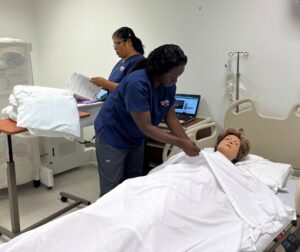 Sept. 24, 2026 – South Florida State College (SFSC) announced that it received $351,549 from the Rural Health Transformation Program (RHTP) funded by the Centers for Medicare and Medicaid Services (CMS) through the Florida Agency for Health Care Administration (AHCA), created through Florida Statute to serve as the chief health policy and planning organization for the state.
As an institution that provides education and services to rural communities, SFSC created Rural Care Connect (RCC) to create pathways in five academic programs by strengthening three programs that currently exist at the College and by developing two new programs. The three programs that will be bolstered through grant funding are Nursing Assistant, Phlebotomy, and Electrocardiography Technology (EKG). The two programs that will be created with the financial support of the grant are Central Sterile Processing Technology and Emergency Medical Responder.
“The application process was highly competitive, and we are thrilled to have the opportunity to help expand access to quality healthcare in rural communities,” said Dr. Kathleen Cappo, dean of health sciences at SFSC. “This grant allows SFSC to be part of a meaningful statewide effort to address healthcare needs in rural Florida, and we look forward to seeing the impact that SFSC and our fellow award recipients will have in the communities we serve.”
SFSC has included community partners, such as AdventHealth, CareerSource Heartland, Mosaic, and Who We Play For, in the development of the five academic programs serving our rural district.
For more information about the programs supported by the RHTP grant, contact Danielle Nuccio, health sciences advisor, at 863-784-7027 or danielle.nuccio@southflorida.edu.
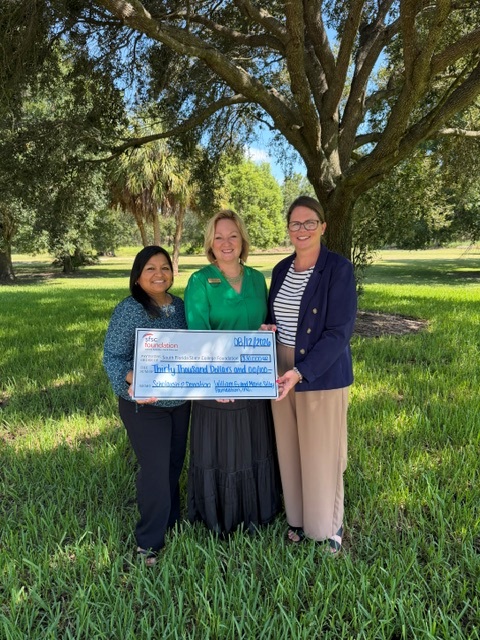 Sept. 22, 2026 – South Florida State College (SFSC) received a $15,000 grant from the William G. and Marie Selby Foundation, Inc. to provide scholarships for students at SFSC’s DeSoto Campus in Arcadia. These funds will be matched through the SFSC Foundation, bringing the total funds for scholarships to $30,000.
Annual scholarships will be awarded up to $1,500 for full-time students, up to $1,125 for students enrolled 9 and 11 hours, and up to $750 for students enrolled 6 and 8 hours. The criteria for obtaining a scholarship through the Selby Foundation is that there must be financial need, the student must be a resident of DeSoto County and a graduate of Desoto County High School, must be accepted or enrolled in a degree program at the SFSC DeSoto Campus, and must maintain a minimum of a 3.0 GPA to be considered for renewal.
Scholarships from the Selby Foundation grant are available for fall 2026 and spring 2027. If a student would like to apply for a scholarship for the summer 2027 term, they must be registered for summer classes by the second week of January 2027.
“Getting to the heart of helping students requires both caring people and funding,” said Dr. Asena Mott, dean of off-campus instructional sites at SFSC. “That’s where The Selby Foundation comes in. Their legacy of care is backed by financial support. For years, they have asked where they could help DeSoto students, and followed through with generosity. Their gifts have elevated students above stumbling blocks and into success. We are ever grateful!”
To apply for a scholarship through the Selby Foundation, students are encouraged to speak with a student advisor at the SFSC DeSoto Campus at 2251 NE Turner Avenue in Arcadia or call 863-993-1757.
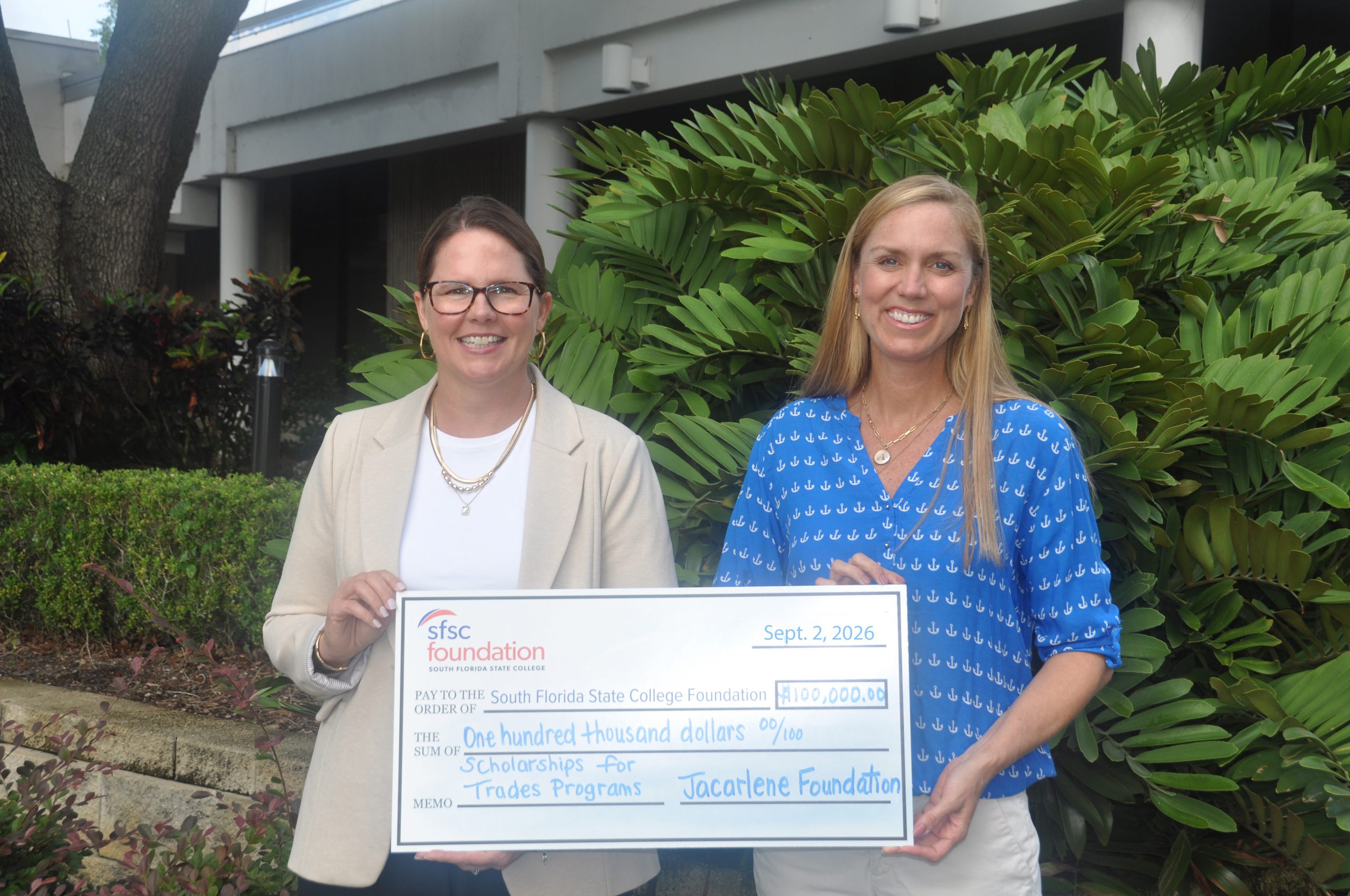 Sept. 16, 2026 – The South Florida State College (SFSC) Foundation received a $100,000 donation from the Jacarlene Foundation to support students enrolled in skilled trade programs at SFSC.
The Jacarlene Foundation trustees stated, “Growing up in an agricultural family in Highlands County, I saw firsthand how vital the skilled trades are to our community. As trustees, supporting these programs—and the students in them—matters deeply to all of us.”
Established on Nov. 15, 1988, the Jacarlene Foundation’s mission is to strengthen Florida through the arts, the environment, and education. Through philanthropy, the Foundation has helped build stronger communities throughout the state to improve life for all of Florida’s residents, human and animal.
“We are deeply grateful to the Jacarlene Foundation for their continued investment in our trade students,” said Emily Dabolt, executive director for institutional advancement at SFSC. “Because many of these programs fall outside traditional degree pathways, the students are not eligible for federal FAFSA or Pell funding, and they face financial barriers that other students do not. This gift helps remove those barriers, allowing students to complete their training, earn industry credentials, and enter the workforce prepared to contribute to the success of Highlands, DeSoto, and Hardee counties.”
Applicants for the Jacarlene Foundation Scholarship must be enrolled and accepted into an SFSC trade program. Preference will be given to students who demonstrate academic promise and financial need. Students can receive an application for the Jacarlene Foundation Scholarship by contacting the SFSC Foundation at foundation@southflorida.edu or 863-453-3133.